THREE:An armistice was arranged with Piedmont, which lasted throughout the autumn and winter. The events at Rome and the flight of the Pope had meanwhile greatly altered the position of the Italian question; and the revolutionary spirit was so strong that Charles Albert found it impossible to resist the demand of his people for a renewal of hostilities. "I must restore war," he said, "or abdicate the crown and see a republic established." He opened his Parliament in person on the 1st of January, 1849, when he delivered a lengthy speech, in which he fully expounded his policy. He invited the nation to co-operate in the great struggle which was impending. In January, the Sardinian Prime Minister, M. Gioberti, addressed a protest to the foreign Powers, in which he stated that though the suspension of hostilities agreed to on the 5th of August, 1848, was productive of fatal political consequences, Sardinia had faithfully observed the agreement, while Austria had disregarded her promises, and exhibited nothing but bad faith. She had pursued an iniquitous system of spoliation. Under the name of extraordinary war contributions her fleet seized Italian vessels navigating the Adriatic. She had put to death persons whose safety was guaranteed by the law of nations. She had violated the most sacred compacts in a manner unparalleled in the annals of civilised nations. Gioberti, however, who was obnoxious to the republican party, was compelled to resign. On the 24th of February the new Ministry[586] issued a programme of its policy, and on the 14th of March M. Ratazzi, Minister of the Interior, announced to the Chamber of Deputies the expiration of the armistice, declaring that no honourable peace with Austria could be expected unless won by arms. War would, of course, have its perils; but between those perils and the shame of an ignominious peace, which would not insure Italian independence, the king's Government could not hesitate. Consequently, he stated that, two days before, a special messenger had been sent to Radetzky, announcing the termination of the armistice. He was perhaps justified by the declaration of the Austrian envoy to London, Count Colloredo, that Austria would not enter into any sort of conference unless she was assured that no cession of territory would be required. The king, meanwhile, had joined the army as a general officer, commanding the brigade in Savoy. The nominal strength of his army at that time was 135,000 men; but the muster-roll on the 20th of March showed only about 84,000 effective troops, including 5,000 cavalry, with 150 guns. Radetzky had under his command an army equal in number, but far superior in equipment and discipline. He at once broke Charles Albert's lines; drove him to retreat upon Novara, where he utterly defeated him. Abdication only remained for the king, and his son, Victor Emmanuel, concluded peace on terms dictated by Austria. The King of Sardinia was to disband ten military corps composed of Hungarians, Poles, and Lombards. Twenty thousand Austrian troops were to occupy the territory between the Po, the Ticino, and the Sesia, and to form one half of the garrison of Alessandria, consisting of 6,000 men, a mixed military committee to provide for the maintenance of the Austrian troops. The Sardinians were to evacuate the duchies of Modena, Piacenza, and Tuscany. The Piedmontese in Venice were to return home, and the Sardinian fleet, with all the steamers, was to quit the Adriatic. In addition to these stipulations, Sardinia was to indemnify Austria for the whole cost of the war. These terms were accepted with great reluctance by the Piedmontese Government, and with even more reluctance by the Genoese, who revolted, and had to be suppressed by the royal troops.
FORE:But there was no rest for Frederick. Daun was overrunning Saxony; had reduced Leipsic, Wittenberg, and Torgau. Frederick marched against him, retook Leipsic, and came up with Daun at Torgau on the 3rd of November. There a most sanguinary battle took place, which lasted all day and late into the night. Within half an hour five thousand of Frederick's grenadiers, the pride of his army, were killed by Daun's batteries of four hundred cannon. Frederick was himself disabled and carried into the rear, and altogether fourteen thousand Prussians were killed or wounded, and twenty thousand of the Austrians. This scene of savage slaughter closed the campaign. The Austrians evacuated Saxony, with the exception of Dresden; the Russians re-passed the Oder, and Frederick took up his winter quarters at Leipsic.Among the other causes which contributed to the unpopularity of the Duke of Wellington and the weakness of his Administration was the prosecution by the Attorney-General of Mr. Alexander, the editor of the Morning Journal. A series of articles had appeared in that paper, which were considered so virulent and libellous, so far surpassing the bounds of fair discussion, that the Duke felt under the same necessity of ordering a prosecution that he had felt to fight the duel with Lord Winchilsea. It was regarded as an inevitable incident of his position, one of the things required to enable him to carry on the king's Government. He obtained a victory, but it cost him dear: a sentence of fine and imprisonment was inflicted upon his opponent, and the Morning Journal was extinguished; but, in the temper of the times, the public were by no means disposed to sympathise with the victor in such a contest. On the contrary, the victory covered him with odium, and placed upon the head of the convicted the crown of martyrdom. Mr. Alexander was visited daily in the King's Bench prison by leading politicians, and a motion was made in the House of Commons with a view to incriminate the Government who ordered the prosecution. In another instance also, but of a nature less damaging, the Government received a warning of its approaching downfall. Mr. Peel, anxious to mitigate the severity of the criminal code, and to render it less bloody, proposed to inflict the penalty of death only on persons committing such forgeries as could not by proper precautions be guarded against. It was a step in the right direction, but one too hesitating, and stopping short of the firm ground of sound policy. Sir James Mackintosh, therefore, on the third reading of the Bill, moved a clause for the abolition of the penalty of death in all cases of forgery, which was carried by a majority of 151 against 138. Thus the Session wore on, in a sort of tantalising Parliamentary warfare, with no decisive advantages on either side till the attention and interest of Parliament and the nation were absorbed by the approaching dissolution of George IV. and the dawning light of a new reign.
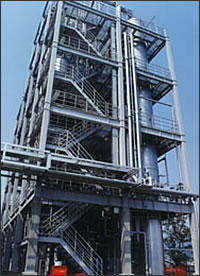
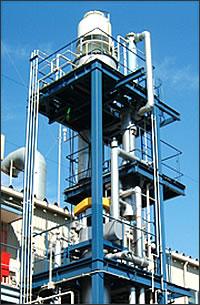
Methanol refinement systems, amyl alcohol refinement systems, ethanol refinement systems, hexanol distillation systems, propanol refinement systems, cyclohexanol distillation systems, isopropanol dehydration systems, ethylene glycol recovery systems, and butanol distillation systems.
FORE:
Hexane distillation systems, tall oil distillation systems, benzene distillation systems, lubricating oil refinement systems, xylene-free distillation systems, low-boiling gas distillation systems, ethylbenzene recovery systems, fusel oil distillation systems, naphthalene distillation systems, propylene recovery systems, and turpentine oil distillation systems.
FORE:WELFEN CASTLE, HANOVER.
Ether distillation systems, camphor distillation systems, epichlorohydrin distillation systems, aniline distillation systems, dioxane refinement systems, acetonitrile distillation systems, furfural refinement systems, formalin distillation systems, cyclohexane distillation systems, monoethanolamine rectification systems, polyglycol ether distillation systems, dimethylformamide recovery systems, acrylic glycol ether distillation systems, acrylonitrile refinement systems, acetone recovery systems, pyridine distillation systems, methyl ethyl ketone recovery systems, picoline distillation systems, methyl isobutyl ketone recovery systems, and acetaldehyde recovery systems.